
A Zombie Film About Grief That Didn’t Trust Itself Enough
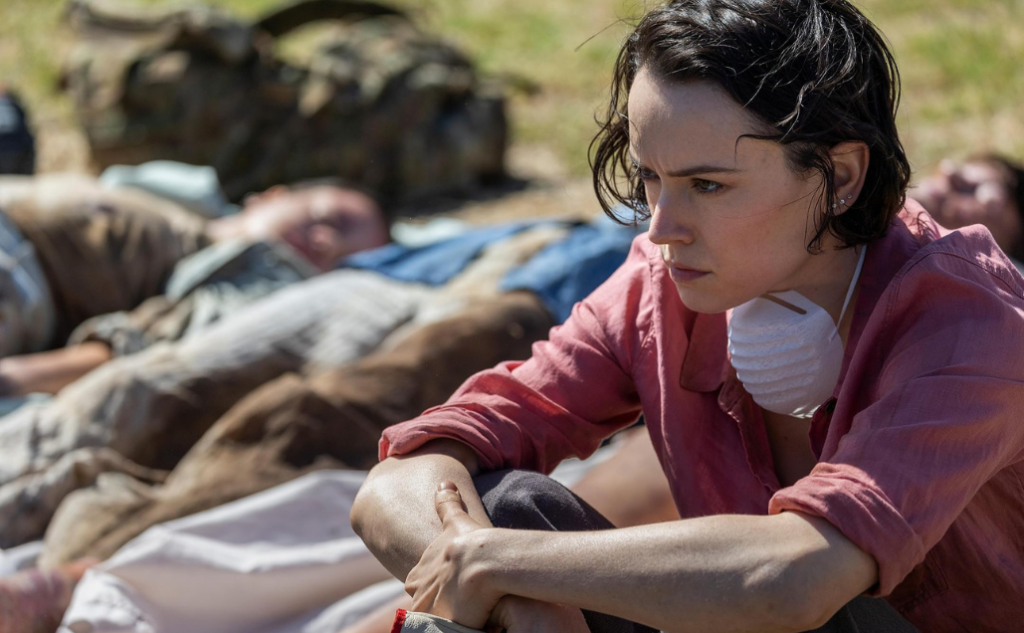
We Bury the Dead Review: ending explained, This is one of those movies that peaks beautifully in some departments and completely tanks in others. So I understand why it might be hard for some of you to decide whether it’s worth your time or not. Overall, I liked it. But the ending? That’s where it becomes the most disappointing and stretched-out part of the whole experience.
If you’re planning to watch it, go in blind. Don’t read the synopsis. Don’t watch the trailer. Both are misleading bait trying to attract the generic zombie-horror audience. This movie is not that. It’s not a fast-paced gore fest. It’s a slow, psychological, grief-driven drama disguised as a zombie film.
The story follows Ava, who travels to Tasmania after a catastrophic American military transport accident triggers a massive blast on Hobart Island, instantly killing around 500,000 Tasmanians. Her husband Mitch was there on a business trip. He is most likely dead. But “most likely” is not enough for someone who needs closure.
Ava is drowning in grief. The visuals of the affected area are horrifying and bleak, and instead of helping her process anything, they intensify the emptiness. Still, she is determined. She joins the body retrieval program just to search for Mitch. And eventually, she sneaks deeper into the city with a guy she meets along the way, entering what looks like a mini zombie wasteland.
Prime Video’s Love Me, Love Me Is Romance on Autopilot
A slow, psychological take on the zombie genre
The zombies are not the core of this story. They exist more in the background than at the center. The emotional journey of Ava is the real focus. Even the zombies themselves are different from traditional portrayals. Their origin is tied to the blast causing some kind of neurological wipeout. Only certain victims “come back online,” which adds an interesting layer of mystery.
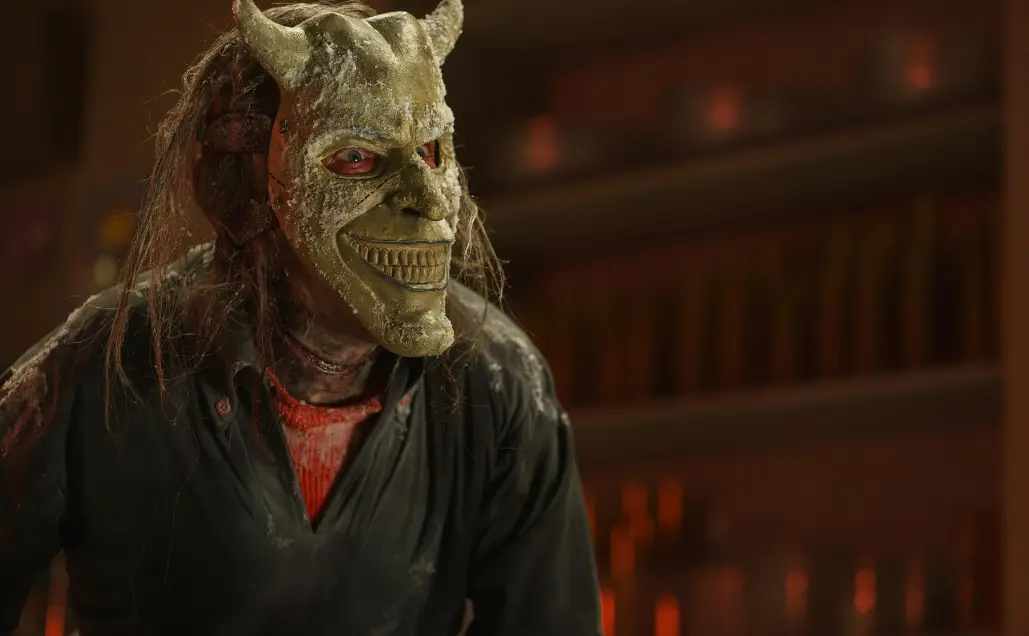
The makeup work and the blend of practical and CGI effects are appreciating. The zombies look disturbing and distinct, but what makes them more unsettling is that they still carry traces of humanity. That human side doesn’t vanish immediately, and that detail adds emotional weight.
The mystery of why only some people return initially works very well. The first time they lean into that ambiguity, it’s effective and chilling. But later, the film overexplains and stretches that thread too far. What started as intriguing becomes repetitive. And by the end, the emotional payoff doesn’t match the buildup.
We Bury the Dead is not your typical zombie movie. If you’re expecting heavy zombie action, constant chaos, and gore-filled sequences, you won’t find that here. At its core, this is the personal journey of a woman searching for closure.
Matt Damon and Ben Affleck Can’t Save ‘The Rip’ From Netflix
Ava’s emotional journey and character arc
Ava’s emotional arc is the real story. She moves from sadness and loss to deep grief and abandonment. From guilt to anger. And eventually toward closure, forgiveness, hope, and even a fragile kind of happiness.
While navigating this internal transformation, she encounters different types of zombies. Some are slow and almost harmless. Others are violent and terrifyingly fast. But these moments are minimal.
And when action does happen, it feels grounded and authentic. The film avoids exaggerated, unrealistic gun-blazing chaos. No flashy head explosions just for shock value. It stays restrained, which I genuinely respect.
The Wrecking Crew Movie Review
We Bury The Dead runs almost entirely on the strength of its cast, and especially on Daisy Ridley’s shoulders.
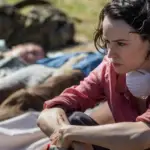
Daisy delivers a deeply authentic performance. Whether it’s dramatic breakdowns, quiet grief, manipulation, or survival-driven action, she feels convincing in every frame. Even though the writers didn’t give her a particularly strong story, Ava as a character is strong. She is emotional and tender, drowning in guilt and grief, yet intuitive, intelligent, and fiercely survival-oriented.
What I liked most is how her emotional state influences her behavior. As she descends deeper into darker revelations and unresolved guilt, the way she handles the zombies shifts. She becomes more ruthless. Less hesitant. That subtle character evolution works.
Another applause-worthy decision is how the film handles Clay (Brenton Thwaites). He is introduced as the physically strong, conventionally “heroic” male presence. But the film does not fall into the cliché of turning him into Ava’s savior. He doesn’t take over the action. He doesn’t overshadow her journey. He truly remains a supporting character. Ava gets herself out of dire situations through her own intelligence and grit. That felt refreshing and earned.
Mark Coles Smith’s character Riley also adds an interesting layer to the story. There’s potential there. But again, the film doesn’t dive deep enough into that subplot. It introduces compelling elements and then doesn’t fully commit to exploring them.
Visuals, music, and atmosphere in We Bury the Dead
Visually, the film is striking. The cinematography is artsy, immersive, and cinematic. The landscapes of Tasmania are captured beautifully, especially in wide shots that emphasize isolation and scale.
The aftermath of the catastrophe is presented with haunting authenticity. The emptiness, the disorder, the silence left behind after half a million deaths, it all feels real. Even the site of the explosion, covered in smoke clouds and storm-like residue, is visually powerful.
The background score blends perfectly with the mood. It leans into somber, tense, grim, and dark tones. Sometimes there is a subtle female humming layered in. Sometimes operatic elements. These choices elevate the emotional atmosphere and stay with you.
Weaknesses and the predictable ending
The filmmakers clearly had passion and intention. The soul of this movie is Ava’s internal struggle, especially her guilt. But the film struggles with commitment. It feels like it wanted to fully embrace being an intimate psychological drama, yet it also tried to cater to a broader audience by inserting thriller elements and leaning into zombie mystery. That tension weakens it.
When a film tries to satisfy everyone, it often loses its essence. The deeper themes become secondary. The message becomes diluted. Instead of fully committing to being an emotional experience, it starts feeling like a product designed for easy marketing.
I can’t help but feel that marketing decisions may have influenced the direction, pushing it toward thriller and zombie elements to make it easier to sell. Maybe if it had stayed fully loyal to its core idea, it would have reached a smaller audience. But it would have been more honest. More powerful. More memorable.
Sometimes credibility and commitment to craft matter more than mass appeal. And We Bury the Dead had the potential to be something truly special if it had trusted its own soul completely.
The visuals, music, pacing, characters, casting, performances; almost everything in We Bury the Dead works. Technically, it’s a very well-made film. But where it struggles the most is in its main conflict and overall story conviction.
Once the premise settles in, you can already sense where it’s heading. And unfortunately, it goes exactly there. No subversion. No emotional curveball. Just the most predictable outcome possible. That predictability becomes the film’s biggest weakness. This is where it dips; and it never really recovers.
Because of that, even though so many technical aspects are done right, the weak and foreseeable storytelling makes it feel boring and, in the long run, unmemorable. If you’re not deeply interested in filmmaking craft, visuals, atmosphere, mood; it’s hard to rewatch this purely for its narrative.
Shockingly, the most disappointing part of We Bury the Dead is its ending. For an 80-minute film, the final stretch feels unnecessarily prolonged. The emotional resolution had already arrived. Ava reaches her destination. She finds what she needs. There’s a conversation with Clay about life, loss, and relationships. That could have been a powerful, quiet ending.
But the film keeps going. It adds extra messaging about closure, forgiveness, happiness, and hope; ideas that were already clear. And because the story itself was predictable, stretching the ending only amplifies that weakness.
The movie could have ended 10–15 minutes earlier and landed stronger. Instead, it lingers. And in lingering, it loses impact.
Conclusion: We Bury the Dead
Even with its glaring and unavoidable flaws, parts of We Bury the Dead truly work: the music, the visuals, the style, the direction, the performances, and especially the dramatization of Ava’s internal struggle. Watching her emotional arc unfold is engaging and, at times, powerful.
Just don’t go in with high expectations. Instead, approach it as a fresh take on the zombie genre; one that avoids heavy clichés and centers a strong female protagonist. If you frame it that way, you’re more likely to appreciate what it attempts.
It’s a solid one-time watch. It won’t waste your time, and it might even introduce you to something slightly different from the usual formula this genre keeps recycling.
Don’t just scroll by, lock in bucketfulent.com like it’s your digital BFF. Bookmark it, slap it on your speed dial, tattoo it on your browser if you must, because if you lose us, we lose you, and that’s a tragedy we’re not ready for. Unleash this content on your friends like confetti at a surprise party.
One thought on “Review: We Bury the Dead (2025) Is Not the Zombie Film You Think It Is”