







A grounded espionage drama that exposes the business of war and moral compromise.
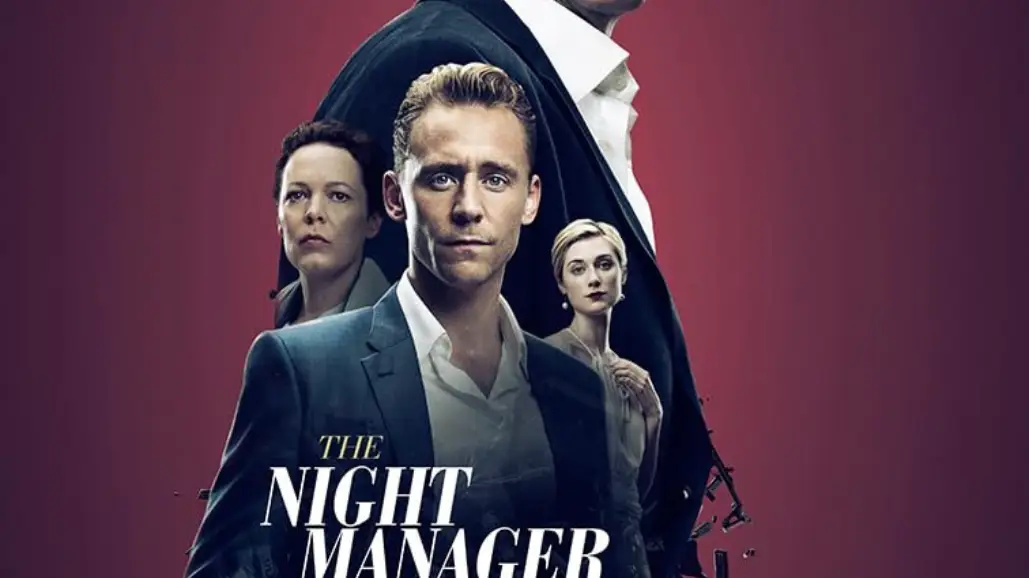
I had been planning to watch The Night Manager Season 1 long before the second season was announced. I had already seen the Indian adaptation and genuinely loved it, which made me curious to experience the original version starring Tom Hiddleston. It almost feels criminal that I had never watched Hiddleston’s work outside the MCU before this, so my expectations were naturally very high. Thankfully, the show more than lived up to them.
The Night Manager is grounded, restrained, and strikingly real in its storytelling. It unfolds at a slow-burning pace that allows the tension to seep into every scene. You feel the espionage pressure, the sexual tension between characters, and the constant fear of being exposed. That anxiety never leaves you, especially whenever Jonathan Pine locks eyes with Roper’s inner circle. The show keeps you on edge, making every small decision feel dangerous.
War is one of the central themes of The Night Manager. The series does not show battlefield action directly. Instead, it focuses on how wars are fueled in countries where poverty and hunger are rampant, dictatorships rule, and people are forced into the streets to fight for basic rights and dignity. These are places desperate for peace, yet they become perfect testing grounds for war profiteers. For arms dealers, chaos is not tragedy, it is opportunity. Human suffering becomes collateral damage in a system built on profit, blood, and indifference.
What makes the show hit even harder is how closely it mirrors the real world. Countries like the United States remain among the largest arms dealers globally, and wherever conflict erupts, their involvement is often direct or indirect. The irony is brutal. Ordinary citizens fund these systems through taxes, yet the profits flow upward to powerful elites, while nations are left with destruction, resentment, and global mistrust. Meanwhile, political administrations openly misuse their power, pushing the world closer to large-scale conflict without accountability.
The corruption depicted in the series feels disturbingly authentic. Intelligence agencies, governments, and security systems are shown as deeply compromised, so entangled in their own rot that even those trying to expose the truth feel helpless. The system is too vast, too interconnected, and too protected. Progress and prosperity are presented as illusions, while beneath the surface the machinery of power devours itself.
Most wars in human history began with hunger for food, a problem that, in today’s world, could be solved if there was genuine will. But the hunger for power and profit is different. That appetite can never be satisfied.
Richard Roper, the main villain of The Night Manager, embodies this truth perfectly. He is an arms dealer living an absurdly luxurious life, with more money than seven generations could ever spend. Yet none of it is enough. His hunger is not for survival, but for control. More money. More leverage. More power over chaos. That hunger has no finish line.
Roper is not a villain who intimidates you the moment he enters a room. Instead, his presence makes you uncomfortable, like something is slightly off but you cannot immediately name it. As the show progresses and you learn more about him, that discomfort slowly turns into fear.
The most unsettling part of Roper is not his wealth or his influence, but his gaze. Through his eyes alone, you can sense the rot, the cruelty, and the emptiness inside him. Hugh Laurie delivers a disturbingly authentic performance, making Roper feel real enough that his presence crawls under your skin every time he appears on screen.
People like Roper, backed by corrupt intelligence agencies and government officials, often believe they are untouchable. They move through the world with inflated egos, convinced that consequences are for lesser people. And more often than not, it is that very ego that leads to their downfall.
But when that same bloated ego belongs to a country’s leader, the cost is paid not by them, but by millions of innocent lives. The future being shaped by war profiteers is terrifying. They can turn the world into a living nightmare overnight, and in many places, that nightmare is already reality. As long as war remains profitable, these machines of destruction will keep producing more suffering.
What The Night Manager also does well is show the hopeful side of the system. Through characters like Angela Burr, Jonathan Pine, Rex Mayhew, Rob Singhal, and Joel, the series reminds us that integrity still exists. These are people inside intelligence agencies who refuse to look away, even when their own departments are compromised and Roper has powerful figures in his pocket. They keep pushing forward, not because it is safe, but because it is necessary.
In reality, people like them remain unsung heroes. They do not receive applause, promotions, or recognition. They act because they understand that if they do not stand up, no one else will. Without people like them, men like Roper would continue spreading chaos and death without resistance.
This is a two-part review. Please continue reading in Part Two.
Stay Updated
Never miss a review or insight—join our community and get fresh content straight to your inbox.